
Proud to be Sri Lanka’s most trusted hospital for compassionate and quality healthcare
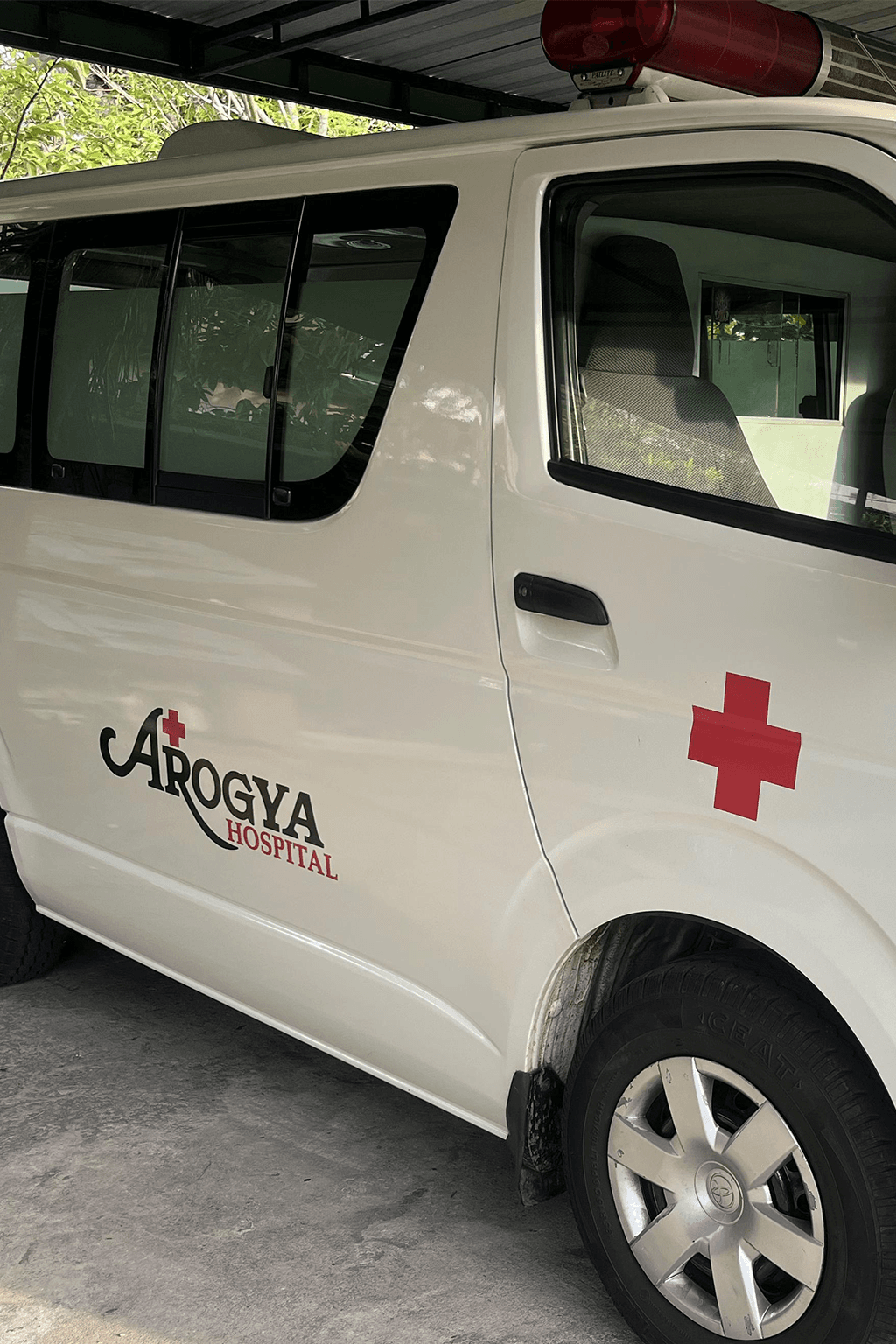
Our emergency ambulance service operates 24/7 with a fleet of 5 fully-equipped Advanced Life Support (ALS) ambulances stationed strategically across the city to achieve a target response time of under 12 minutes from call to arrival. Each ambulance is built on a purpose-built Mercedes-Benz or Force Motors chassis with a customized patient compartment featuring powered loading stretchers, stair chairs for multi-story buildings, and a scoop stretcher for spinal immobilization. The clinical configuration includes a Zoll X-Series cardiac monitor/defibrillator with 12-lead ECG interpretation, Hamilton-T1 transport ventilator, multiple-channel syringe infusion pumps, suction apparatus, oxygen supply (two D-cylinders providing 4+ hours), complete drug kit stocked with emergency medications (epinephrine, amiodarone, adenosine, atropine, naloxone, midazolam, furosemide, nitroglycerin, and 20+ other life-saving drugs), intubation equipment (video laryngoscope, endotracheal tubes of all sizes, supraglottic airways, cricothyrotomy kit), intraosseous access device (EZ-IO), and a full obstetrics emergency kit for prehospital deliveries. Each ambulance carries a portable ultrasound (butterfly iQ+) enabling paramedics to perform eFAST exams (Extended Focused Assessment with Sonography in Trauma) for detecting internal bleeding, pneumothorax, or cardiac activity en route. The patient compartment has independent climate control, LED trauma lighting, a mobile data terminal showing live traffic routing, and a 4G live video uplink allowing emergency physicians to see and speak to the patient during transport. Our ambulances are connected to the hospital’s electronic health record system - the moment a patient is loaded, a pre-notification alert triggers ETU team assembly with patient demographics, chief complaint, and vital signs transmitted ahead of arrival. Two of our ambulances are specially configured as Neonatal & Pediatric Transport Ambulances with transport incubators (closed-care system with temperature/humidity/oxygen control), pediatric-capable ventilators, and specialized dosing protocols. All ambulances are equipped with Stryker power-PRO XT stretchers (lowest loading height - 24 inches) reducing back injuries to crew and providing smooth transfer even on stairs.
What makes our ambulance service exceptional is not just the equipment - it's the human expertise operating it. All our ambulances are staffed by a dual-paramedic model: an Advanced Paramedic certified in prehospital trauma life support and advanced cardiac life support, and an Emergency Medical Technician trained in driving and vehicle extrication. Our paramedics undergo extensive dedicated emergency medicine training and regular competency assessments. For stroke patients, our paramedics are trained in stroke assessment scales, transmitting the results ahead so the stroke team prepares the CT scanner and medications before you arrive. Our cardiac arrest outcomes for patients receiving prehospital CPR are excellent, achieved through mechanical CPR devices that provide consistent, fatigue-free compressions. For trauma patients, our paramedics can perform needle decompression, pelvic binder application, and in extreme life-threatening airway situations, cricothyrotomy. All our vehicles are tracked via GPS with live status updates sent to the caller - you can see exactly where the ambulance is and its estimated arrival time.
When to call an ambulance: Chest pain or pressure radiating to arm or jaw, difficulty breathing, sudden severe headache, stroke symptoms, seizure lasting more than a couple of minutes, severe allergic reaction with throat swelling, major trauma, loss of consciousness, drowning or electrocution, poisoning or overdose, active labor with frequent contractions or water broken, newborn with breathing difficulty, or any emergency in a pregnant woman, infant, or elderly person. What to do while waiting: Do NOT move the patient unless in immediate danger. Do NOT give food, water, or any oral medications. For bleeding, apply direct pressure with a clean cloth. For cardiac arrest, start hands-only CPR if you know how. For seizure, roll patient onto side and remove nearby objects. For possible spine injury, keep the patient completely still. Keep the main door unlocked and clear a path. Have the patient's ID, insurance card, medication list, and your mobile phone ready.